
OpenAI Launches Dots, Always-On AI Agents
OpenAI’s new Dots agents are designed to work continuously in the background, connect to thousands of applications and handle tasks with minimal supervision.

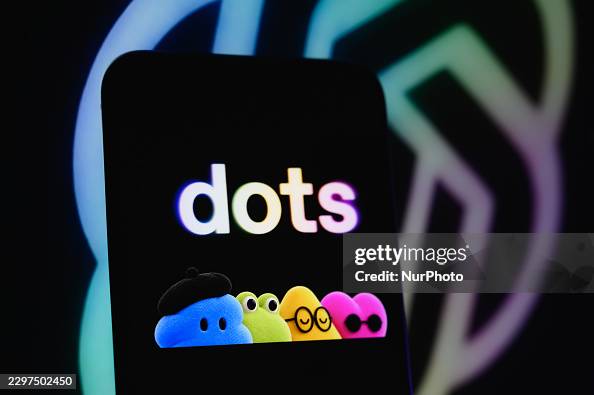
OpenAI has introduced Dots, a new generation of always-on AI agents designed to move beyond traditional chatbot interactions and continuously work toward users’ goals. Announced on September 29, 2026, Dots are powered by OpenAI’s GPT-6 Astra model and operate through their own cloud computer and browser. Rather than waiting for users to issue individual prompts, a Dot can continue working on projects, conduct research, analyze information and complete tasks in the background. OpenAI says the agents are designed to learn users’ preferences and working styles over time, making them more like digital coworkers than conventional AI assistants.
One of the main features of Dots is their ability to interact with external applications. OpenAI says the agents can connect to more than 4,000 apps through its plugin ecosystem, giving them access to a wide range of tools and services. Dots can also work across ChatGPT, Slack and Microsoft Teams, while maintaining context between those channels. Users can provide a goal and allow the agent to determine the steps required to complete it, rather than manually directing every stage of the process. For example, OpenAI says a Dot could monitor customer feedback, identify recurring requests, make software improvements, test those changes and return completed work for the developer to review.
The technology is also designed to remain active when the user is not directly interacting with it. Each Dot has its own cloud computer, meaning it can continue working even when the user’s personal computer is turned off. Users can inspect the agent’s computer and follow its progress, while scheduled and background activities can continue between conversations. OpenAI also says Dots can proactively research connected information using read-only tools, allowing them to identify potentially useful information without being explicitly prompted each time. This persistent approach is intended to turn AI from an on-demand assistant into a system that can maintain responsibility for ongoing projects.
OpenAI has also placed significant emphasis on permissions and user control because Dots can take actions across connected services. Users can decide which applications an agent can access and create custom rules that allow, block or require approval for particular actions. OpenAI’s auto-review system evaluates actions that could affect accounts or share information, while certain sensitive activities, such as changing a password, must remain under the user’s control. The company acknowledges that Dots can still make mistakes and advises users to review consequential work before relying on it.
The launch places OpenAI directly in the growing competition over autonomous AI agents. Reuters reported that Dots are aimed at the expanding enterprise market, where technology companies are increasingly attempting to build AI systems capable of completing work with limited human supervision. Meta has also been developing its Muse AI assistant, while Google Cloud has now introduced its own Gemini agent for workplace tasks. The competition is therefore shifting from simply producing more capable chatbots toward building AI systems that can access software, maintain context, make decisions and execute tasks on behalf of people and organizations.
Dots are being rolled out to eligible ChatGPT Pro and Business Premium users, while Enterprise users can access a beta when their workspace administrator enables it. OpenAI says the first Dot is included with eligible plans at no additional cost, although access is being introduced gradually and availability varies by market. The company plans to expand the system further, including the ability to use multiple Dots and eventually scale the amount of work individual agents can perform. The development signals OpenAI’s broader ambition to make AI agents persistent digital workers capable of handling complex, multi-step responsibilities rather than simply responding to individual prompts.




