Huawei’s 7nm Chip Outperforms Apple’s 3nm A17 Pro in Multicore Tests
Huawei’s latest Kirin 9050 Pro, estimated to use 7nm-class technology, has surpassed Apple’s older 3nm A17 Pro in Geekbench 6 multicore testing, highlighting advances in Chinese chip design.

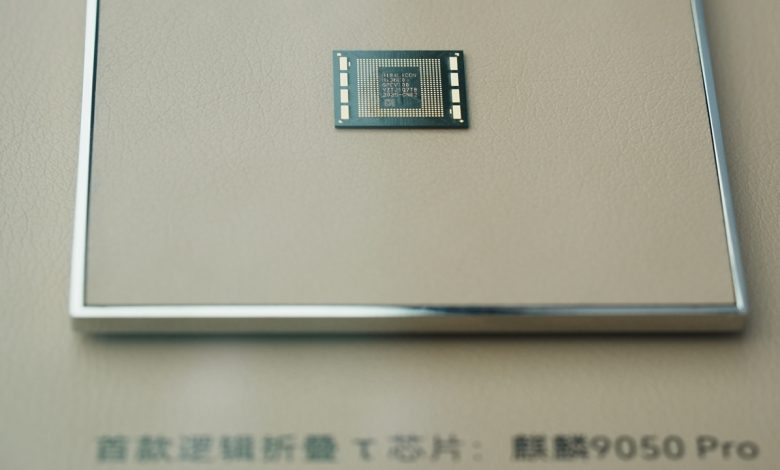
Huawei’s latest smartphone processor, the Kirin 9050 Pro, is attracting attention after research firm Bernstein reported that the chip outperformed Apple’s 3nm A17 Pro in Geekbench 6 multicore testing. The processor was introduced earlier this month with Huawei’s Mate XT 2 tri-fold smartphone and is estimated by Bernstein to have been manufactured using technology equivalent to a 7nm process node.
The comparison is notable because Apple’s A17 Pro was produced using a 3nm manufacturing process and was introduced in 2023. Bernstein’s testing indicates that the Kirin 9050 Pro can deliver stronger multicore performance despite being based on older-generation process technology. However, the result applies specifically to the Geekbench 6 multicore benchmark and does not mean the Huawei chip is faster than Apple’s latest processors across all workloads.
Bernstein also found that the Kirin 9050 Pro remains around 30% behind Apple’s newer A20 Pro, which uses a 2nm-class process, while its single-core performance is closer to processors based on older 4nm-class technology. This shows that Huawei has narrowed the performance gap but has not eliminated the broader semiconductor manufacturing advantage held by companies using the most advanced process technologies.
Huawei has been developing alternative approaches to improve chip performance as access to advanced semiconductor manufacturing equipment remains restricted. The company has promoted its Tau Scaling Law and LogicFolding architecture, which focus on improving how signals move through chips and reducing the limitations associated with simply shrinking transistor sizes. Huawei has said its approach could allow future processors to achieve significant performance improvements without relying entirely on the newest manufacturing nodes.
The Kirin 9050 Pro therefore represents another step in Huawei’s efforts to improve smartphone-chip performance under technological constraints. Bernstein reported that the processor delivers roughly 20% higher multicore performance than the previous Kirin 9030 Pro, along with improvements in graphics and neural-processing performance. The results are likely to keep attention focused on how Huawei and Chinese semiconductor manufacturers use architecture, packaging and manufacturing techniques to close the gap with leading global chipmakers.