
Lagarde Warns Europe Against Relying on US and China for AI
ECB President Christine Lagarde has warned that Europe must develop its own artificial-intelligence capabilities to avoid becoming dependent on technologies controlled by the United States or China.

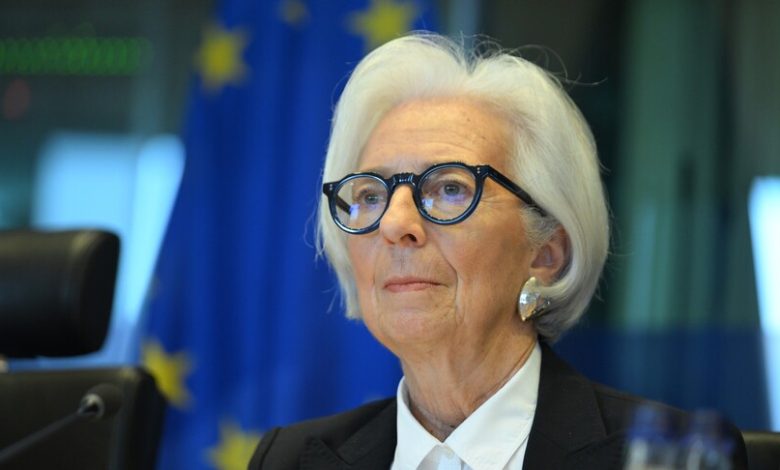
European Central Bank President Christine Lagarde has urged Europe to build stronger domestic artificial-intelligence capabilities, warning that dependence on foreign AI systems could create serious strategic and economic vulnerabilities. Speaking at an ECB conference, Lagarde said access to advanced AI models could become a fundamental national-security issue because the most powerful systems are increasingly concentrated in the United States and China. She argued that Europe should not assume it will always have unrestricted access to technologies developed elsewhere.
Lagarde’s warning follows an earlier speech in Vienna in which she argued that Europe cannot simply purchase the transformative technologies of the AI era from other countries. She noted that the United States currently has a much larger share of global AI computing capacity than Europe and that US digital investment has been growing significantly faster. According to Lagarde, Europe needs to increase its own investment in AI infrastructure, models and data centres if it wants to capture a greater share of the productivity and economic benefits generated by the technology.
The ECB president also pointed to the possibility of geopolitical restrictions affecting access to advanced AI models. She referred to a US export-control measure earlier in 2026 that temporarily interrupted European access to certain advanced models, arguing that such an event demonstrated that dependence on foreign technology is no longer merely theoretical. Lagarde said European institutions, particularly financial organisations, could become vulnerable if they rely heavily on AI systems whose availability can ultimately be influenced by governments outside Europe.
Beyond questions of technological sovereignty, Lagarde warned that AI could introduce new risks to Europe’s financial system. In her October 1 speech, she said almost nine out of ten significant euro-area banks already use generative AI, while securities-market firms are also increasing their investment. More autonomous AI agents could eventually influence trading strategies, create new cybersecurity vulnerabilities or amplify problems across interconnected financial institutions.
Lagarde’s position reflects a broader European push for greater technological independence rather than complete isolation from global technology markets. She has argued that Europe should develop its own AI models and infrastructure while maintaining access to international technologies. The objective, according to her speeches, is to ensure that Europe remains sufficiently capable and strategically important within the global AI supply chain so that its economic institutions are not placed at the mercy of decisions made elsewhere.




