
Nvidia CEO Jensen Huang Defends China Business Ties Amid Espionage Concerns
Nvidia chief executive Jensen Huang has defended the company's business relationships involving China, insisting that its dealings with Singapore-based Megaspeed were normal as reports raise questions about an alleged Chinese intelligence operation.

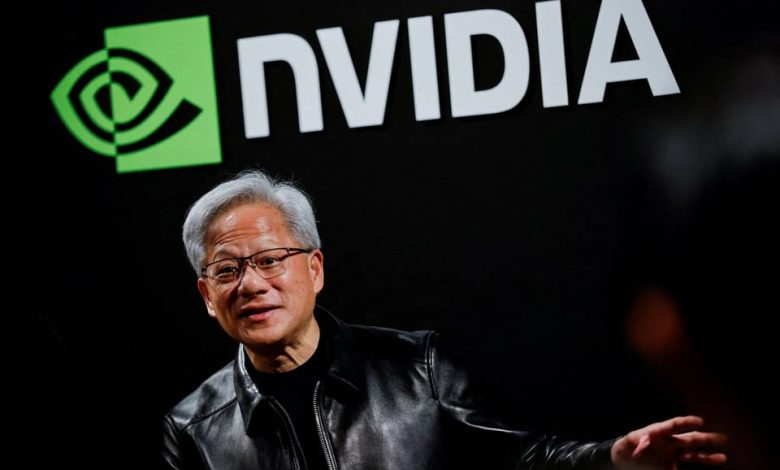
Nvidia CEO Jensen Huang has defended his company’s business relationship with Singapore-based cloud computing firm Megaspeed International following reports of a United States intelligence investigation involving a former executive at the company. The controversy emerged after reports suggested that Alice Huang, also known as Huang Le, was suspected by American authorities of working as an intelligence asset for China. The investigation reportedly examined whether she had helped Chinese interests obtain access to restricted artificial intelligence chips and whether her business relationships provided opportunities to gather information about Nvidia. Huang maintained that his interactions with the company were ordinary business engagements and that Nvidia had conducted checks on its customers.
According to reports, Alice Huang previously held a leadership position at Megaspeed, a Singapore-based company that purchases Nvidia processors to build data centres and rent computing capacity to customers. American authorities reportedly became concerned about the possibility that advanced Nvidia chips were being redirected to China in violation of United States export restrictions. Investigators allegedly discovered that Alice Huang had met Jensen Huang on several occasions while she was under surveillance. The reports raised questions about the potential access she may have gained to influential figures in the American technology industry. However, the publicly available information does not establish that Jensen Huang knowingly participated in any intelligence operation or that Nvidia deliberately supplied restricted technology to unauthorised buyers.
Responding to the allegations, Jensen Huang described Nvidia’s dealings with Megaspeed as normal and said the company had examined the firm’s deployment of its graphics processing units. He reportedly told Bloomberg that Nvidia had studied the deployments and accounted for the processors supplied to the customer. Nvidia also defended its chief executive’s meetings, explaining that engaging with customers and business executives is a routine responsibility and that Huang meets thousands of customer representatives annually. The company further maintained that Megaspeed’s relationship with Nvidia was not unusual compared with those of other regional cloud computing customers. These statements represent Nvidia’s position as questions surrounding the investigation continue to attract attention.
The situation highlights the growing geopolitical importance of advanced AI chips, particularly as Washington continues to restrict the export of certain high-performance processors to China. Nvidia occupies a central position in the global artificial intelligence industry because its GPUs are widely used to train and operate advanced AI models. This has made the company’s international business relationships a matter of economic and national-security interest. American authorities have been concerned that restricted chips could reach Chinese technology companies through intermediaries, cloud computing providers or other arrangements. China, meanwhile, continues to invest heavily in developing its own semiconductor industry and expanding access to computing infrastructure. The dispute demonstrates how commercial technology transactions can become entangled in the wider strategic competition between the United States and China.
The Chinese government has rejected the espionage allegations as unfounded, while Nvidia has insisted that its business dealings were legitimate. Reports also indicated that former US President Donald Trump’s administration had previously been briefed about intelligence concerns involving the suspected individual, although the circumstances surrounding that briefing remain subject to reporting based on unnamed sources. No publicly established finding has demonstrated that Jensen Huang knowingly assisted Chinese intelligence or that Nvidia’s customer relationship with Megaspeed constituted an export-control violation. The controversy nevertheless places renewed attention on the challenges facing global technology companies as they navigate international markets, government restrictions and national-security concerns. For Nvidia, maintaining customer relationships while complying with export regulations will remain an important challenge as competition over AI infrastructure intensifies.




