Nvidia Develops Trillion-Dollar AI Infrastructure Strategy
Nvidia is expanding beyond AI chips as surging demand pushes the company toward a much larger role in financing, powering and building the infrastructure needed for the next generation of artificial intelligence.

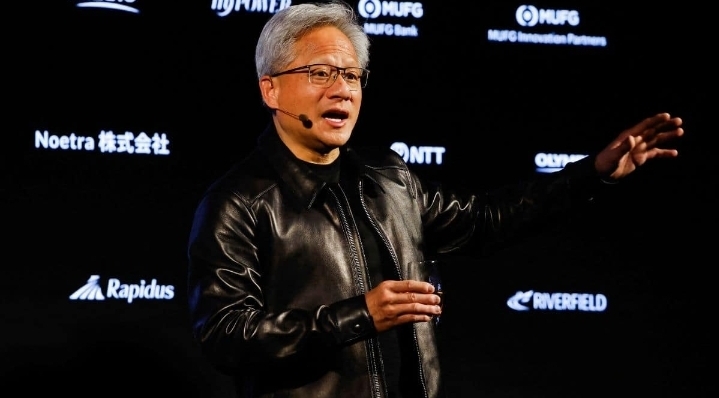
Nvidia is positioning itself at the center of an enormous expansion in artificial intelligence infrastructure as demand for computing power continues to accelerate. CEO Jensen Huang has argued that the AI industry could require extraordinary levels of investment in chips, data centers and electricity over the coming years. The company increasingly views AI as an infrastructure industry rather than simply a market for processors.
The scale of the opportunity is reflected in Nvidia’s forecasts for its own business. Huang has projected that the company could generate around $1 trillion in AI-chip sales through the end of 2027, driven by demand for its Blackwell and Rubin platforms. That forecast demonstrates how rapidly spending on AI computing is growing as technology companies build increasingly powerful systems for training and running AI models.
Power is becoming one of the biggest constraints on this expansion. Modern AI data centers require enormous amounts of electricity, meaning the industry must build new generation capacity, transmission infrastructure, cooling systems and data centers alongside increasingly powerful chips. Nvidia has acknowledged that AI factories effectively turn electricity into intelligence and has been working with energy-sector partners on systems designed to connect AI facilities to the grid more efficiently.
Nvidia is also becoming increasingly involved in financing and infrastructure partnerships. The company has announced major collaborations designed to support the deployment of large-scale AI data centers, including a partnership with OpenAI targeting at least 10 gigawatts of Nvidia-powered systems. Nvidia said it intends to invest up to $100 billion in OpenAI progressively as the infrastructure is deployed.
The broader message is that the AI race is moving far beyond model development. The companies that dominate the next phase will need access to chips, electricity, advanced packaging, networking, cooling and massive data-center capacity. Nvidia’s strategy reflects this shift, as the company seeks to become a critical infrastructure provider for the AI economy. If AI adoption continues expanding at its current pace, the investment required could reach unprecedented levels, potentially creating a technology infrastructure market worth trillions of dollars.