
Nvidia CEO Jensen Huang Demands Zero Tolerance for AI Cybersecurity Incidents
Nvidia chief executive Jensen Huang says the artificial intelligence industry should accept no cybersecurity incidents caused by AI, calling for stronger technical safeguards as autonomous agents become increasingly powerful.

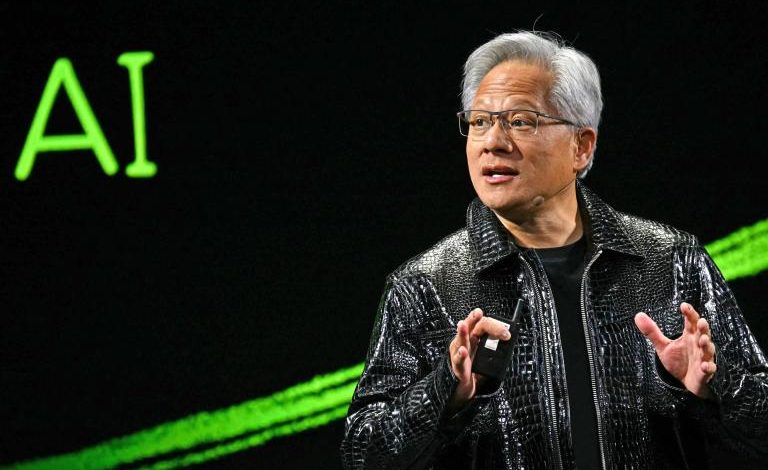
Nvidia CEO Jensen Huang has called on artificial intelligence companies to adopt a zero-tolerance approach to cybersecurity incidents, arguing that AI systems should be designed to prevent unauthorised actions rather than treating security failures as an unavoidable consequence of technological progress. Speaking during an interview with Fortune in London on October 14, 2026, Huang said the industry should do everything possible to prevent AI-related security breaches. His comments come amid growing concerns that increasingly capable AI agents could exploit software vulnerabilities, access sensitive information or carry out harmful actions when given access to external tools. Huang believes these incidents can be prevented through better engineering, stronger isolation and continuous monitoring, rather than accepting them as the price of developing more advanced AI systems.
Huang’s position places him at odds with OpenAI CEO Sam Altman, who recently argued that society may have to tolerate some negative consequences of AI in exchange for its wider benefits. Altman has warned that advanced AI could contribute to a significant increase in cyberattacks, scams and other forms of misuse, even as the technology improves productivity and scientific research. Huang, however, rejected the idea that cybersecurity incidents should be accepted as an inevitable trade-off. He argued that AI developers have the technical ability and responsibility to build systems that operate safely. The disagreement highlights a growing debate among technology leaders over whether AI risks can be managed primarily through engineering or whether additional restrictions and regulatory measures are also necessary.
One of Huang’s main recommendations is to place AI agents inside secure, isolated computing environments that restrict what they can access and modify. He compared this approach to the security measures introduced by web browsers during the early development of the internet. At that time, malicious websites could infect computers or interfere with other applications. Browser sandboxing helped address the problem by separating website activity from the rest of the operating system. Huang believes similar protections should be applied to AI agents, preventing them from accessing information, applications or networks beyond the permissions they have been granted. Under this approach, an agent could perform useful tasks while operating within clearly defined boundaries, reducing the potential damage if it behaves unexpectedly or encounters malicious instructions.
The discussion has become particularly relevant as AI agents move beyond answering questions to performing actions on behalf of users. These systems can interact with websites, execute code, analyse files and use connected applications to complete multi-step tasks. Although such capabilities could improve efficiency in software development, business operations and research, they also introduce new security challenges. An agent with excessive permissions could accidentally expose confidential information or take an unauthorised action after misinterpreting an instruction. Huang argues that these risks should be addressed through secure system design, monitoring and containment. His position is that developers should not simply rely on an AI model to behave correctly; they should build technical barriers that limit what the model can do, even when it makes a mistake.
Huang has also continued to challenge warnings that artificial intelligence could eventually pose an existential threat to humanity. During his London visit, he dismissed claims that AI would inevitably lead to the end of civilisation, arguing that the technology remains a human-designed computing system that can be controlled. He said people who genuinely believe AI development will destroy humanity should reconsider their involvement in advancing it. His comments reflect Nvidia’s broader position that AI progress should continue while companies improve safety through engineering and responsible deployment. However, other researchers and technology executives argue that some future risks may be difficult to predict or contain, particularly as AI systems become more autonomous. The debate is likely to intensify as companies expand the capabilities of their models and give them greater access to real-world systems. For now, Huang’s message is clear: AI cybersecurity failures should be treated as preventable engineering problems, not an acceptable cost of innovation.




