
NASA and ESA Release Stunning Hubble Image Revealing Secrets of Ancient Star Cluster
The newly released image of Messier 30 offers astronomers valuable clues about the Milky Way's formation and evolution billions of years ago.

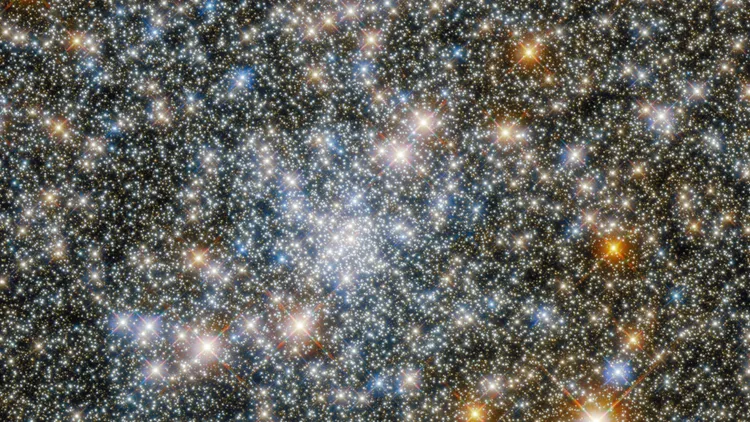
NASA and the European Space Agency (ESA) have released a remarkable new image captured by the Hubble Space Telescope, showcasing an ancient collection of stars known as Messier 30 (M30), also called NGC 7099. Located approximately 27,500 light-years from Earth in the constellation Capricornus, the globular star cluster contains thousands to millions of stars packed closely together. The image provides a detailed view of one of the Milky Way’s oldest stellar communities and offers scientists another opportunity to investigate the history of our galaxy.
Globular clusters are roughly spherical groups of stars that typically orbit around the outer regions of galaxies. Scientists estimate that many of these clusters are between 11.5 billion and 13.5 billion years old, making them almost as ancient as the universe itself. Because of their extraordinary age, they preserve important information about the chemical composition and conditions that existed during the early stages of galactic development. The Milky Way is believed to contain at least 150 such clusters, each providing valuable evidence about its formation.
Astronomers have also discovered that Messier 30 and several other globular clusters move in the opposite direction to the Milky Way’s rotation. This unusual orbital behaviour suggests that some of these ancient star systems may not have originally formed within our galaxy. Instead, researchers believe the Milky Way could have captured them through gravitational interactions billions of years ago. Studying their movements and chemical characteristics could help scientists reconstruct how smaller stellar systems became part of the galaxy we know today.
The latest image combines observations collected through three separate Hubble research programmes spanning approximately 15 years. By capturing ultraviolet, visible and near-infrared wavelengths, the telescope provides a more comprehensive view of the cluster’s different stellar populations and their movements. The observations also help researchers investigate unusual objects, including blue straggler stars, which appear younger and brighter than other stars in their surroundings. The release further demonstrates Hubble’s continuing scientific importance in uncovering the history of the universe and improving our understanding of how galaxies evolve.




