Power and Memory Replace Chips as the Biggest Bottlenecks in the AI Race
Industry leaders say electricity and advanced memory—not GPUs—are now the biggest obstacles to scaling the next generation of artificial intelligence.

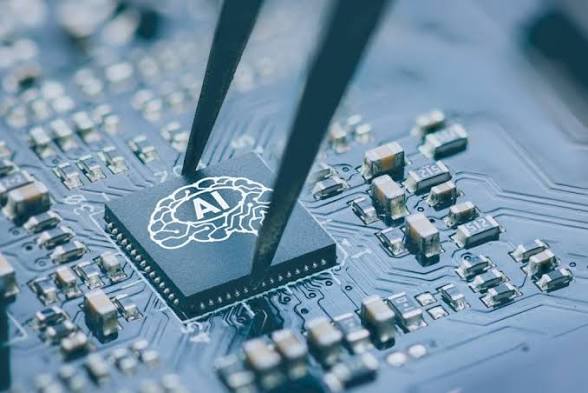
The global artificial intelligence race is entering a new phase, with industry experts saying that power supply and memory chips have overtaken AI processors as the biggest constraints on future growth. After years of scrambling to secure Nvidia GPUs and other AI accelerators, major technology companies are now facing shortages of electricity, High Bandwidth Memory (HBM), and data center capacity. These infrastructure challenges are slowing the deployment of new AI systems, even as demand for generative AI continues to surge.
The shift is being driven by an unprecedented wave of investment from hyperscale cloud providers including Amazon, Microsoft, Google, and Meta. These companies are spending hundreds of billions of dollars to build AI data centers, but many projects are encountering delays because local power grids cannot supply enough electricity to operate and cool massive AI clusters. Analysts say access to reliable power has become just as important as access to advanced semiconductors, with some new facilities waiting months or even years for grid connections.
At the same time, memory has become a critical resource in AI infrastructure. Modern AI accelerators require enormous amounts of HBM and DRAM to process increasingly complex models, and nearly all advanced memory production has already been committed through long-term agreements with major customers. Memory manufacturers such as Samsung, SK hynix, and Micron continue expanding production, but supply remains tight as AI demand outpaces manufacturing capacity. Industry analysts now describe memory as one of the most valuable components in the AI supply chain.
The changing landscape is also reshaping investment priorities. Rather than focusing solely on faster AI chips, technology companies are investing heavily in power infrastructure, energy-efficient data centers, advanced cooling systems, memory technologies, and high-speed networking. Industry leaders argue that future AI competitiveness will depend on solving these infrastructure challenges, since the most powerful processors cannot deliver their full potential without sufficient electricity and memory bandwidth.
The evolution of AI infrastructure highlights how the industry’s biggest challenges have shifted beyond chip manufacturing. While advanced processors remain essential, experts increasingly believe that reliable power supplies, abundant memory, and scalable data center infrastructure will determine which companies lead the next generation of artificial intelligence. As AI models become larger and more computationally demanding, solving these bottlenecks will be critical to sustaining the industry’s rapid pace of innovation.