
Samsung and SK Hynix Upgrade China Chip Factories Amid US Export Restrictions
Samsung Electronics and SK Hynix are upgrading their Chinese manufacturing facilities to produce more advanced memory chips, seeking to meet rising artificial intelligence demand and counter the rapid growth of China’s domestic semiconductor industry.

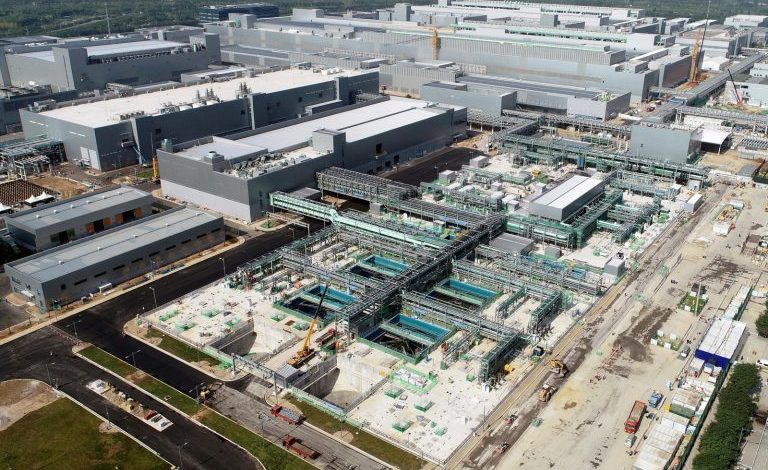
South Korean technology giants Samsung Electronics and SK Hynix are upgrading their factories in China to manufacture more advanced NAND flash memory chips, according to a Reuters report published on October 21, 2026. The companies are attempting to protect their market positions as demand for storage technology increases alongside the expansion of artificial intelligence infrastructure. NAND memory is widely used in smartphones, personal computers, solid-state drives and data centres. As AI companies build larger computing systems, demand for high-capacity storage has increased, encouraging manufacturers to improve chip performance and storage density. However, the planned upgrades are taking place amid strict United States export controls that limit the semiconductor manufacturing equipment foreign companies can introduce into their Chinese facilities. Both Samsung and SK Hynix confirmed that upgrades were underway and said they were consulting with US authorities.
Samsung is reportedly preparing to upgrade its factory in Xi’an, northwestern China, which accounts for approximately 40% of the company’s global NAND production. The facility currently manufactures memory chips with around 200 layers, but Samsung intends to transition towards its 286-layer V9 NAND technology. According to people familiar with the plans cited by Reuters, the company is targeting monthly production of 5,000 wafers by December 2026, with a potential increase to 40,000 wafers per month by December 2027. Samsung stated that the upgrade complies with US export regulations and is intended to meet growing demand from customers worldwide. The company also said it was not expanding production capacity or constructing new manufacturing facilities, an important distinction given Washington’s restrictions on expanding advanced semiconductor manufacturing operations in China.
SK Hynix is pursuing a similar strategy at its NAND manufacturing facility in Dalian, northeastern China. The company currently produces chips with approximately 192 layers at the site and is reportedly preparing to manufacture products with at least 240 layers. Sources cited by Reuters said SK Hynix may also seek permission to conduct research and development involving chips with more than 300 layers. The Dalian facility originated from SK Hynix’s acquisition of Intel’s NAND business in 2021 and remains the principal manufacturing site for its Solidigm storage business. More advanced NAND technology can increase storage capacity within a given physical space and potentially lower the cost per unit of stored data. Such improvements are particularly important for AI data centres, which require substantial storage capacity to manage datasets, model checkpoints and other computing workloads.
The upgrades come as Chinese semiconductor manufacturer Yangtze Memory Technologies, commonly known as YMTC, strengthens its position in the domestic NAND market. Research firm Omdia estimated that YMTC held 38.5% of China’s NAND market in the second quarter of 2026, up from 28% for the whole of 2025. The same figures placed Samsung’s share at 33.5%, down from 36%, while SK Hynix’s share fell to 17% from 20%. YMTC currently produces chips with 160 and 232 layers and has also developed a limited quantity of 294-layer products, according to the Reuters report. The company is reportedly working towards manufacturing chips with more than 300 layers. Its progress has increased competitive pressure on foreign manufacturers, particularly as Chinese technology companies seek domestic alternatives to imported semiconductor products.
United States export controls remain a major uncertainty for Samsung and SK Hynix. Washington requires the companies to obtain annual licences for certain US-made semiconductor manufacturing equipment used in their Chinese factories. US authorities have indicated that licences may be granted to support the operation of existing facilities, while upgrades to technology and capacity expansion face greater restrictions. Reuters reported that it could not independently establish the extent to which US authorities had approved the equipment needed for the newly reported plans. The situation highlights the difficult balance facing South Korean chipmakers: China remains an important manufacturing base and market, but restrictions could limit their ability to keep their facilities technologically competitive. As AI infrastructure spending continues to increase global demand for memory, the success of these upgrades will depend on regulatory approvals, manufacturing execution and the companies’ ability to compete with rapidly advancing Chinese rivals.




