SpaceX launches massive Starship rocket in first test flight since IPO
The SpaceX Starship and Super Heavy v3 Booster lift off on its 13th test flight from the SpaceX launch complex in Starbase, Texas, U.S., July 24, 2026.

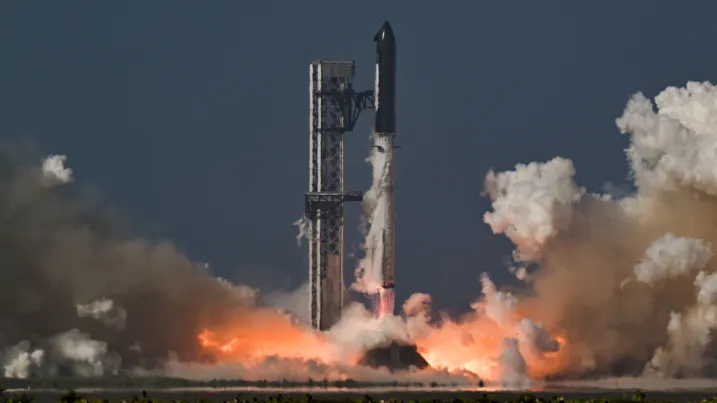
SpaceX completes 13th Starship test flight, deploys next-generation Starlink satellites
SpaceX successfully launched its Starship rocket on Friday from its Starbase facility in Texas, marking the vehicle’s 13th test flight and its first mission since the company’s record-breaking IPO last month.
The Super Heavy booster separated from the Starship spacecraft about two minutes after liftoff before making a controlled splashdown in the Gulf. SpaceX said the landing was not flawless, as only some of the booster’s engines reignited for the landing burn, resulting in a “hard splashdown.”
The upper-stage Starship, however, achieved a “soft splashdown” in the Indian Ocean, remaining intact and providing engineers with their first detailed look at a fully preserved heat shield after re-entry.
Dubbed “lucky number 13” by SpaceX employees during the livestream, the mission also marked a major milestone with the successful deployment of 20 next-generation Starlink V3 satellites about 18 minutes into flight. The larger, more powerful satellites feature upgraded solar arrays capable of producing twice the energy of previous models. They were designed to deorbit and burn up roughly 20 minutes later.
Built in Redmond, Washington, the new satellites are part of SpaceX’s broader effort to expand its Starlink internet network. The company is also developing “Starmind” satellites, which are intended to function as orbital data centres in the future.
Starship, the largest rocket ever built, is central to SpaceX’s long-term ambitions of creating a fully reusable launch system capable of carrying heavier payloads at lower costs. The rocket is expected to support future NASA lunar missions, expand the Starlink constellation, and eventually transport astronauts to Mars. A major NASA demonstration flight is scheduled for next year.
Friday’s mission was only the second test of the latest Starship V3 design.
Despite the successful milestones, industry analyst Tim Farrar of TMF Associates said the flight showed SpaceX still has significant work ahead before achieving rapid rocket reusability. He noted that the booster’s engine relight issue could pose serious risks if it occurred during an attempted return to the launch pad.
The launch came after SpaceX postponed a planned flight on Thursday because of poor weather and scrubbed another attempt on July 16 after a booster issue halted engine ignition moments before liftoff.
Meanwhile, SpaceX’s shares have struggled in recent weeks, falling in four of the past five weeks and declining 43% from their peak closing price on June 16.