Total Solar Eclipse to Cross Europe and Greenland on August 12, 2026
A rare total eclipse will briefly turn parts of the Northern Hemisphere dark, with the path of totality crossing Greenland, Iceland, the North Atlantic and northern Spain.

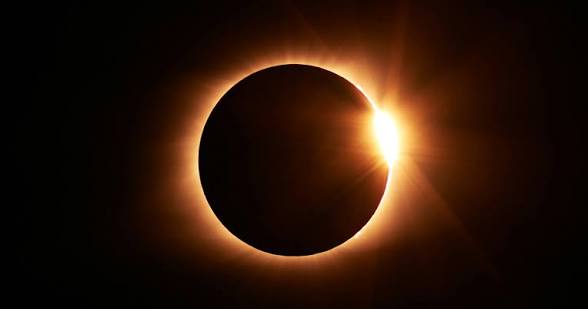
A rare total solar eclipse is set to take place on August 12, 2026, creating one of the year’s most anticipated astronomical events. During the eclipse, the Moon will pass directly between Earth and the Sun, completely blocking the Sun for observers along a narrow path of totality. The event will be visible in totality across parts of Greenland, Iceland, the North Atlantic and northern Spain, while much wider areas of Europe and surrounding regions will experience a partial eclipse.
For observers inside the path of totality, the experience will be dramatically different from an ordinary partial eclipse. As the Moon gradually covers the Sun, daylight will fade and the sky will darken before the period of totality begins. The maximum duration of totality will be approximately 2 minutes and 18 seconds, giving astronomers and skywatchers a short but valuable window to observe the Sun’s outer atmosphere, known as the corona.
Iceland and Spain are expected to attract particularly strong interest because of the rarity of total eclipses in those regions. Iceland will experience its first total solar eclipse since 1954, while northern Spain will fall directly beneath the path of totality. The event is also significant because it will be the first total solar eclipse to cross continental Europe in 27 years, making it an important occasion for astronomers, photographers and eclipse enthusiasts.
Scientists will use the eclipse as an opportunity to study the Sun’s corona and its changing activity. The corona is normally difficult to observe because the Sun’s bright surface overwhelms it, but totality naturally blocks the solar disk and makes the outer atmosphere visible. Observations of the corona can help researchers better understand solar activity and the processes that influence space weather, which can affect satellites, communications and other technologies around Earth.
The August eclipse is therefore more than a spectacular sky event—it is an opportunity to witness a rare alignment of the Sun, Moon and Earth while giving scientists another chance to study our nearest star. With totality crossing several locations in the Northern Hemisphere and partial phases visible across a much broader region, millions of people will have an opportunity to experience at least part of the event.