White House Exempts Open-Weight AI Models from New Government Safety Reviews
New U.S. AI oversight framework focuses on advanced closed-source models while allowing open-weight AI systems to remain outside voluntary government testing.

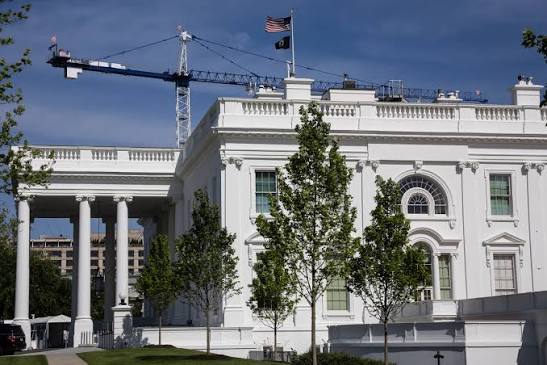
The White House has announced that open-weight AI models will be exempt from its new voluntary government safety review framework, a decision that could significantly influence the future of artificial intelligence development in the United States. Under the policy, only the most advanced closed-source frontier AI models—particularly those with sophisticated cybersecurity or hacking capabilities—will be encouraged to undergo pre-release security testing before they are made publicly available. Open-weight models, whose parameters can be downloaded and modified by developers, will not be included in the current review process.
The decision was reportedly shared during a White House meeting attended by representatives from leading AI companies, including OpenAI, Anthropic, Google, Meta, and Nvidia. Administration officials argued that exempting open-weight models would encourage innovation while avoiding unnecessary regulatory burdens on developers. Although the review framework is voluntary, officials believe it will help identify security risks in cutting-edge proprietary AI systems before they are released to the public, particularly those capable of advanced cyber operations.
Supporters of the exemption say open-weight AI plays a critical role in maintaining U.S. technological leadership by giving startups, universities, researchers, and businesses access to powerful AI systems without relying entirely on a handful of proprietary providers. Several technology companies, including Nvidia and Microsoft, have previously argued that open-weight models promote competition, accelerate innovation, and strengthen the broader AI ecosystem. They also contend that overly restrictive regulations could slow American AI development while giving overseas competitors an advantage.
The policy has also drawn criticism from AI safety advocates and some lawmakers, who argue that increasingly capable open-weight models can pose significant security risks if released without proper evaluation. Critics warn that once these models are publicly available, they can be modified, redistributed, and used in ways that developers can no longer control. Some experts have called for greater transparency around the White House’s review framework, noting that many details remain confidential and that excluding open-weight models could leave important safety gaps as AI capabilities continue to advance.
The exemption highlights the ongoing debate over how governments should regulate artificial intelligence while preserving innovation. As AI systems become more powerful and widely deployed, policymakers face the challenge of balancing national security, economic competitiveness, and technological openness. While the current framework excludes open-weight models, White House officials have indicated that the policy could evolve in the future if these systems become substantially more capable. The decision marks another important step in shaping the regulatory landscape for AI in the United States as competition with global AI developers continues to intensify.