BYD Files Six Solid-State Battery Patents, Eyes 2027 Trial Production
The Chinese EV giant is expanding its solid-state battery research with a dual-electrolyte design aimed at solving one of the technology’s biggest engineering challenges.

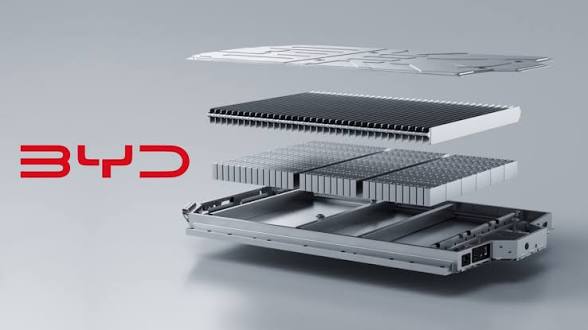
BYD is strengthening its position in the global race to develop solid-state batteries, filing six new patents covering technologies designed to improve the performance and durability of next-generation battery cells. The filings reportedly focus on a dual-electrolyte approach that combines halide and sulfide-based solid electrolytes, with the goal of improving the interface between the electrolyte and electrodes.
A major challenge for solid-state batteries is maintaining a stable connection between solid materials inside the cell. Unlike conventional lithium-ion batteries, which use liquid or gel electrolytes, solid-state designs use solid materials to transport lithium ions. BYD’s latest patents address this problem through technologies involving advanced cathode structures, buffer layers and methods intended to improve ionic contact.
The patent activity also points toward BYD’s longer-term production plans. Chinese media reports indicate that the company could begin small-scale production in 2027 using its dual-electrolyte cathode technology. The initial cells would reportedly be tested in prototype vehicles before any decision on wider commercial deployment. BYD itself has not officially confirmed that specific production timetable, so the 2027 target should be viewed as a reported plan rather than a guaranteed launch date.
If the technology can successfully move from laboratories to automotive production, solid-state batteries could offer important advantages, including potentially higher energy density and improved safety. However, commercialization remains difficult because manufacturers must solve problems involving manufacturing costs, material stability, production scale, charging performance and long-term durability. The broader solid-state battery industry is still working to overcome these challenges before the technology can become mainstream in electric vehicles.
BYD’s latest filings therefore represent another step in the company’s broader battery strategy. The company has already invested heavily in its Blade Battery technology and ultra-fast charging systems, and its solid-state research could eventually provide another route toward higher-performance EV batteries. With automakers and battery manufacturers around the world racing to commercialize solid-state technology, BYD’s growing patent portfolio shows that the next major competition in electric vehicles may increasingly be fought over battery chemistry and manufacturing technology, not just vehicle design.