DNA Breakthrough Identifies Teen Murdered Nearly 26 Years Ago
Genetic Genealogy Finally Gives ‘Chelsea Jane Doe’ Her Name

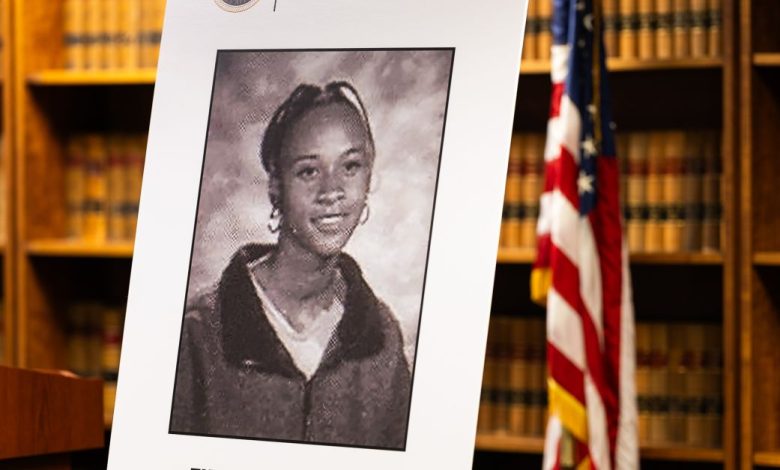
Nearly 26 years after she was found murdered and unidentified, a teenage girl known for decades as “Chelsea Jane Doe” has finally been identified as Tiffany Bradley, bringing closure to a case that remained unresolved for years.
The breakthrough was achieved through investigative genetic genealogy, a technique that combines DNA analysis with traditional genealogical research to reconstruct a person’s identity. Although the method has often been used to identify criminal suspects, it is increasingly helping authorities restore the identities of previously unnamed victims across the United States.
“The fact that we are here today is a miracle,” Bradley’s niece, Shakirah Wiggins, said. “It is totally amazing that after 26 years, people care enough to give her a name and return her to her family.”
Teen Vanished as Victim Remained Unidentified
According to the FBI, Tiffany Bradley was 16 years old when she disappeared in November 2000. Her family remembered her as a cheerful teenager with a bright smile.
At the same time, investigators in Chelsea, Massachusetts, about 300 miles away, were trying to identify the mutilated remains of a teenage girl discovered in a parking lot across the river from Boston. Although the man responsible had confessed to strangling and dismembering the victim and was already imprisoned, authorities were unable to determine who she was, Chelsea police said.
For years, the victim remained known only as “Chelsea Jane Doe.”
DNA Technology Solves Decades-Old Mystery
The investigation gained new momentum three years ago when private forensic science company Othram developed a DNA profile from the victim’s remains.
David Mittelman, Othram’s founder and chief executive officer, said the condition of the recovered remains made the DNA extremely difficult to analyse.
Investigators first had to obtain usable genetic material before combining DNA evidence with extensive genealogy research, including newspaper archives, social media records and family history documents, to reconstruct Bradley’s family tree.
Using the DNA profile, the FBI ultimately identified a match with Bradley’s brother, confirming the victim’s identity and ending decades of uncertainty for her family.
Advances in Genetic Genealogy Transform Cold Cases
Experts say the case highlights how recent advances in investigative genetic genealogy are helping solve long-standing mysteries that were previously considered unsolvable.
For generations, genealogists relied primarily on historical documents to trace family relationships. Over the past two decades, DNA analysis has become an increasingly powerful tool for overcoming gaps in traditional records, according to CeCe Moore, co-founder of DNA Justice, a nonprofit organisation that allows individuals to upload their genetic profiles for use by law enforcement genetic genealogists.
Moore said the 2018 identification of the Golden State Killer marked a turning point for the investigative technique.
“That really changed everything,” she said.
Following that case, the FBI established a dedicated investigative genetic genealogy team after recognising the technology’s potential to solve more cases. Bradley’s identification is among dozens that have since been achieved using the same approach.