Porsche Signs $1.5 Billion AI Partnership With Tata Consultancy Services
The five-year agreement will bring artificial intelligence into Porsche’s engineering, manufacturing, operations and customer-experience systems while TCS acquires Porsche’s consulting unit MHP.

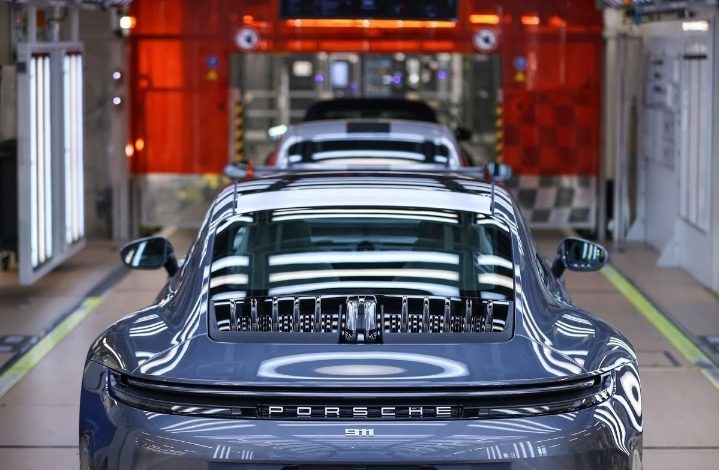
Porsche has signed a five-year partnership worth €1.25 billion, or about $1.5 billion, with India’s Tata Consultancy Services (TCS) as the German automaker accelerates its use of artificial intelligence. The agreement will introduce AI technologies across Porsche’s engineering, manufacturing, operations and customer-experience activities.
As part of the broader deal, TCS will acquire MHP Management- und IT-Beratung GmbH, Porsche’s Germany-based management and IT consulting subsidiary, for an enterprise value of approximately €320 million ($374 million). The transaction is expected to close within three to four months, subject to regulatory approval.
The partnership is designed to combine Porsche’s automotive expertise with TCS’s software, AI and engineering capabilities. The companies plan to develop AI applications that can improve processes across vehicle engineering, factory operations and digital services. MHP will also bring roughly 4,500 employees into the TCS organization, expanding the Indian technology company’s presence in the European automotive sector.
For Porsche, the agreement is also part of a broader effort to focus more tightly on its core automotive business. CEO Michael Leiters said transferring MHP to TCS would allow Porsche to concentrate on building sports cars while benefiting from TCS’s global technology resources. MHP is expected to continue working with Porsche under its new ownership.
The deal highlights how AI is becoming a major part of the automotive industry’s transformation. Automakers are increasingly using AI not only for driver-assistance and vehicle software, but also for factory optimization, engineering, supply chains and customer services. Porsche’s agreement with TCS shows that the AI race is extending deep into traditional manufacturing, where companies are looking to use intelligent software to improve efficiency and competitiveness.