Cloud Giants Raise AI Infrastructure Spending Forecasts as Demand Shows No Signs of Slowing
Amazon, Microsoft, Google, and Meta increase capital expenditure plans, pushing combined AI infrastructure investment toward record levels.

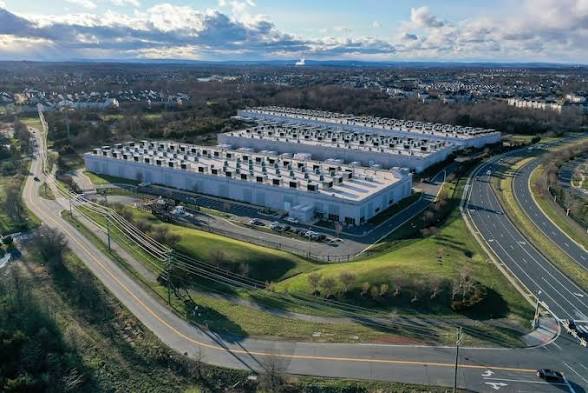
The world’s largest cloud computing companies are dramatically increasing their capital expenditure (CapEx) forecasts as demand for artificial intelligence infrastructure continues to exceed expectations. Amazon, Microsoft, Google, and Meta have all announced higher spending plans for data centers, AI servers, networking equipment, and custom AI chips, bringing their combined capital investment close to $600 billion this year. The surge reflects the industry’s determination to expand computing capacity fast enough to support the explosive growth of generative AI, cloud services, and enterprise AI applications.
Amazon is leading the spending race after raising its 2026 capital expenditure forecast to approximately $220 billion, with the majority of the investment dedicated to expanding Amazon Web Services (AWS) and AI infrastructure. Google parent Alphabet has also increased its spending outlook to accelerate the construction of AI data centers and deploy more Tensor Processing Units (TPUs), while Microsoft continues investing heavily in Azure’s AI capabilities. Meta, meanwhile, is expanding its AI infrastructure to support next-generation AI models, recommendation systems, and virtual reality initiatives. Together, these companies are building one of the largest technology investment cycles in history.
Much of the additional spending will be directed toward purchasing advanced AI chips from companies such as Nvidia and AMD, alongside massive quantities of High Bandwidth Memory (HBM), networking hardware, storage systems, and power infrastructure. The rapid expansion has already placed enormous pressure on semiconductor supply chains, contributing to shortages of advanced memory chips and chip packaging capacity. Industry analysts believe hyperscalers are securing hardware years in advance to avoid delays as competition for AI computing resources intensifies.
Despite concerns from some investors about the scale of spending, cloud providers argue that AI demand continues to justify the investment. Revenue from AI-powered cloud services has grown rapidly as businesses adopt generative AI, autonomous agents, and machine learning applications across nearly every industry. Executives say the current spending cycle is necessary to ensure sufficient computing capacity for future workloads, even if it temporarily reduces free cash flow and increases capital intensity. Analysts also expect total AI-related capital expenditure across the technology industry to surpass $1 trillion in 2027 if current growth trends continue.
The rising CapEx forecasts underscore how artificial intelligence has become the primary driver of global technology investment. Rather than slowing after the first wave of AI adoption, hyperscale cloud providers are accelerating spending to strengthen their competitive positions in what many describe as the largest infrastructure buildout since the birth of cloud computing. As demand for AI services continues to grow, the industry’s focus is shifting from simply developing smarter AI models to building the enormous computing infrastructure needed to power them, creating long-term opportunities across the semiconductor, networking, energy, and data center industries.